




Cancer immunotherapy PD-1 may accelerate rapid deterioration of the disease in some patients
In recent years, the clinical application of cancer immunotherapy has developed rapidly. Immune checkpoint blockers, such as PD-1 and other antibody drugs, have also shown breakthrough efficacy in the field of immunotherapy. However, in cancer patients treated with PD-1/PD-L1 antibodies, rapid cancer progression was also observed in a small population of patients. At the end of 2016, researchers at the Gustave Roussy Institute in Paris reported that 12 out of 131 cancer patients had doubled their tumor growth rate within 3 months after receiving PD-1 treatment. These scholars refer to the clinical manifestations of this group of patients as Hyperprogressive Disease (HPD), suggesting that immune checkpoint blockade drugs may also have potential harmful effects.
More than two years have passed, and due to the increasing number of similar clinical cases, the issue of rapid progression of cancer has received further attention. A recent issue of the journal Science published an article titled 'Cancer immunotherapy may have a dark side', which specifically addressed this issue. The article also listed a case. She is a 65 year old female patient with a rare type of endometrial cancer undergoing treatment at the Oncology Department of the University of California, San Diego (UCSD). The patient's cancer has spread to the liver, indicating a very poor prognosis, but she still feels good and is capable of working and swimming. As a last hope, the doctor administered PD-1 immunotherapy to her. Although this medication may have miraculous effects in other advanced cancer patients. However, three weeks after she started taking the medication, her abdomen rapidly swelled and the liver tumor had rapidly grown to the size of a citrus (see figure). The doctor said, "She just experienced an explosive growth of tumor, and although she will die no matter what, unfortunately we may have accelerated her death
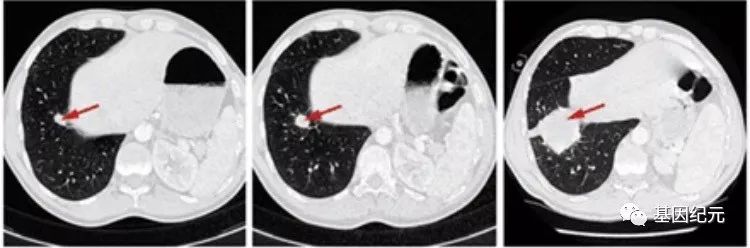
The tumor volume of the patient before PD-1 treatment was not very large (left image); After 3 weeks of PD-1 treatment, the tumor grew rapidly (as shown in the figure on the right)
At present, the epidemiology, natural characteristics, and predictable indicators of HPD in cancer patients treated with PD-1/PD-L1 antibodies are not yet fully understood. Therefore, some oncologists and researchers suspect that this phenomenon may be speculative, as the rapid growth of cancer may be a natural disease process. Any oncologist treating severe cancer may encounter situations where the patient's condition rapidly deteriorates and they die quickly. Perhaps before the use of PD-1, the natural characteristic of the patient's tumor was destined to grow rapidly. At the upcoming annual meeting of the American Association for Cancer Research, the FDA and the National Cancer Institute (NCI) will organize an expert meeting specifically to discuss how to further confirm issues related to HPD and determine which patients should not receive PD-1 drug treatment. At the same time, scientists are also more concerned and eager to understand the mechanism of HPD occurrence in immunotherapy.
At present, the clues related to the mechanism of HPD mainly include mutations in some oncogenes such as EGFR, and an increase in MDM2 or MDM copy number. Some studies have also found that in lung cancer patients who develop HPD, an abnormally large number of specific types of macrophages are commonly clustered in tumor tissue when receiving anti-PD-1 drugs, suggesting that PD-1 inhibitors may switch the tumor microenvironment to an immunosuppressive state that stimulates tumor growth through macrophages. In summary, further in-depth work is needed to confirm the explanation of the mechanism behind the occurrence of HPD based on these preliminary studies.
PD-1 is currently a popular drug for tumor immunotherapy, which can significantly improve the condition and provide long-lasting relief in some advanced patients. At present, the effective rate of PD-1 treatment is around 20%, and most patients have not yet benefited from PD-1 treatment. In addition, the occurrence of HPD indicates that there is a more complex immune mechanism behind PD-1, so the clinical use of PD-1, especially in elderly cancer patients, must be particularly cautious to avoid the consequences of HPD.